Demo site — requests are routed to an accredited local pro This site is for sale →

TirageNet — Sherbrooke, Eastern Townships

A clean chimney draws on the first fire

Mechanical sweeping, camera inspection, fireplace and insert, dryer vent, caps and crowns: TirageNet runs the brush from the crown to the firebox, checks the draft with a smoke test and tells you what will hold the winter. In Sherbrooke and the Townships.

450 °Cthe temperature at which creosote ignites
6 modrying wood under cover before burning
6services, from sweeping to the crown
8municipalities served across the Townships
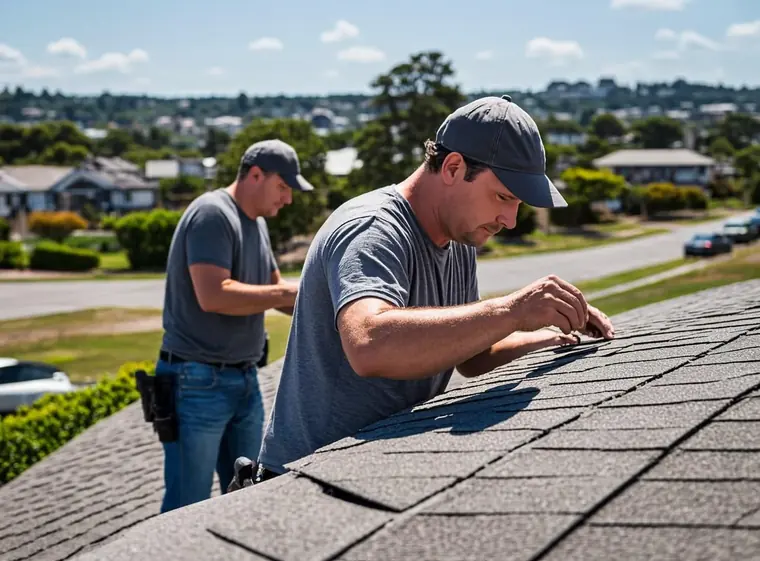
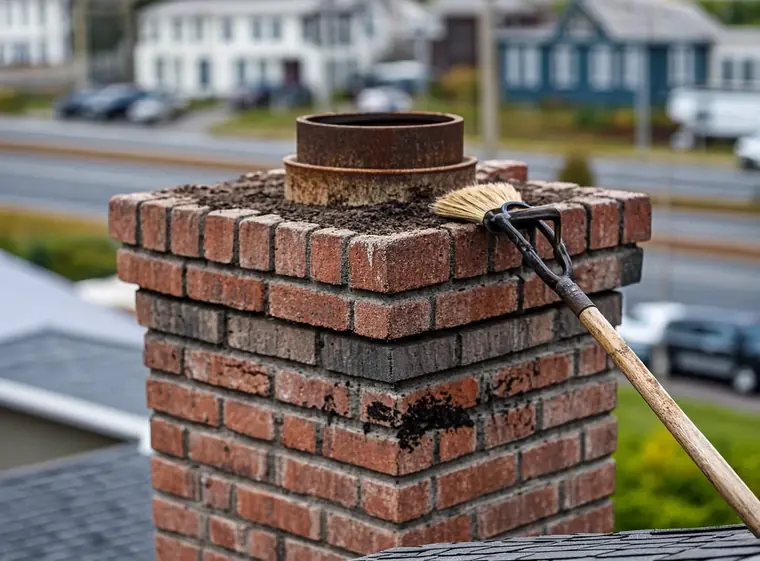
A TirageNet sweep working a brick chimney on a Townships roof
Draft checked with a smoke test on every job

The method

How a chimney is swept, crown to firebox

A sweep does not start with the brush but with a diagnosis: the chimney is read from the ground to the crown, the camera goes down if the flue is doubtful, then the brushing and the draft check. Here is the order, because it is what separates a clean flue from one that is merely brushed.

01

Diagnose

The chimney is read at the joint and the crown, and the flue is checked from inside. A liner crack or a bird's nest changes everything: the brush does not repair leaking masonry.

02

Brush

The brush rides from the crown to the firebox on flexible rods that follow the bends. The creosote breaks off the walls and falls to the base, where a sheet catches it.

03

Collect

The soot is gathered in the firebox and lifted with the shop vacuum, leaving nothing in the room. A clean sweep is a job site you would not recognise on the way out.

04

Verify

A smoke cartridge is lit in the firebox and the smoke must leave clean at the crown. If it stalls, the flue is blocked or the draft is weak: we go again before concluding.

Our services

What we sweep around Sherbrooke

Chimney Sweeping

Chimney Sweeping

Sweeping loosens the creosote and soot packed in the flue: the brush runs from the top down, the deposits are collected and the draft is checked with a smoke test. A clean flue vents the smoke and cuts the fire risk.

See the service →
Camera Inspection

Camera Inspection

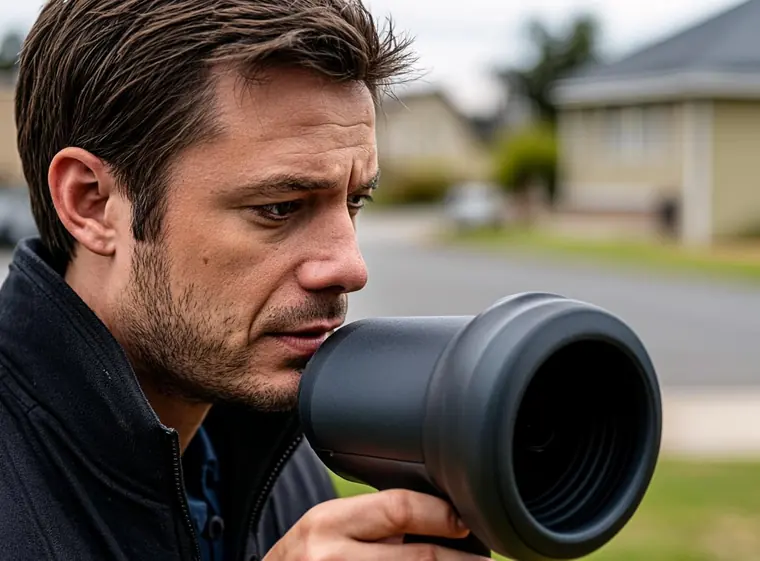
A camera rides down the flue and films the walls: liner cracks, separated joints, a bird's nest, an obstruction. The picture shows what the brush cannot see and decides whether a repair is due.

See the service →
Fireplace & Insert Sweeping

Fireplace & Insert Sweeping

A fireplace and an insert sweep differently from a stove: the glass, the baffle and the combustion chamber come apart to reach the flue. A dirty insert heats less and pushes smoke back into the room.

See the service →
Dryer Vent Cleaning

Dryer Vent Cleaning

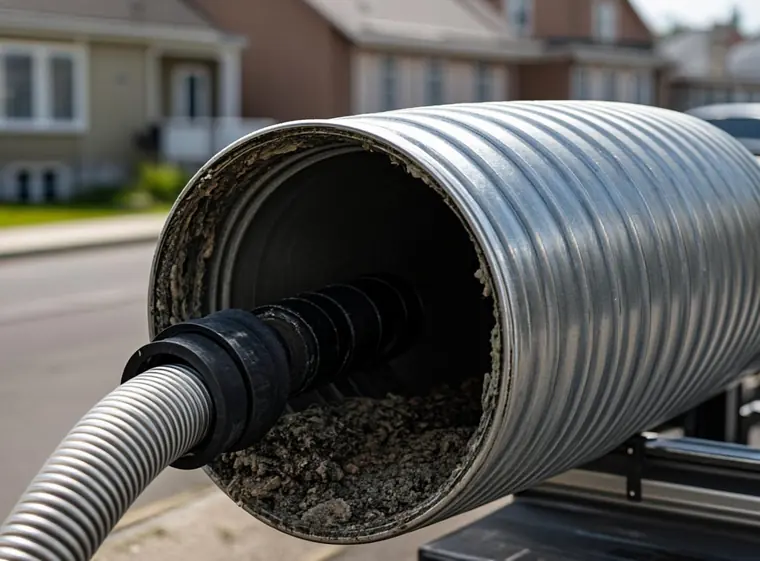
Lint packs the dryer duct and blocks the hot air: drying runs longer, the motor overheats and the lint becomes fuel. The duct is cleared along its whole length with a rotary brush.

See the service →
Chimney Crown Repair

Chimney Crown Repair

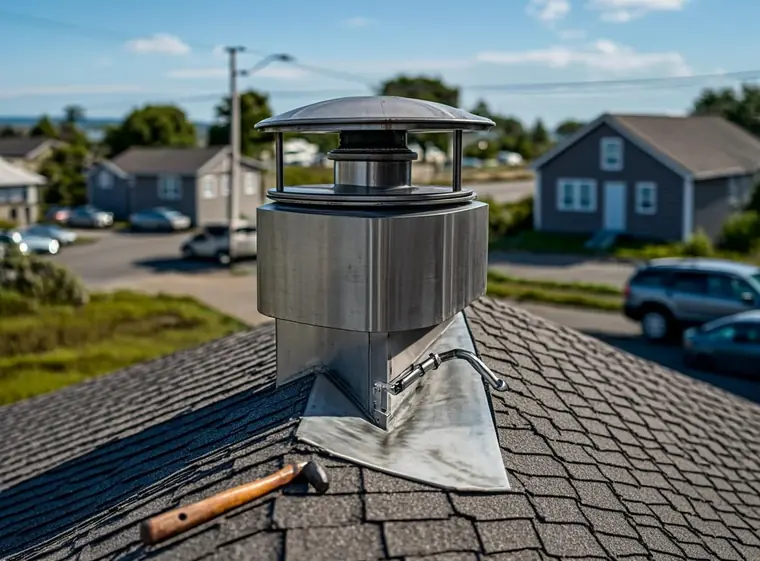
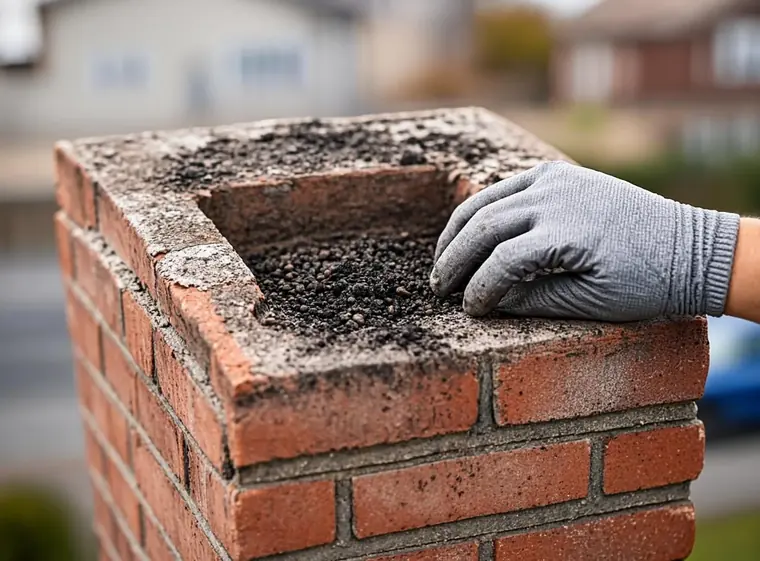
The concrete crown cracks through freeze and thaw, and water seeps into the masonry. We redo it on a slope, with a flexible joint, so the rain sheds away from the flue instead of entering it.

See the service →

On the roof

Creosote, a delayed-action fuel

Creosote is not dirt, it is fuel. It forms when the smoke cools on its way up the flue and condenses into a black, shiny crust, and it ignites around 450 degrees Celsius — a temperature a chimney fire passes in seconds. The deposit builds in three stages: a fine grey dust, then a hard black crust, then a glaze that clings to the walls like tar. The third stage is the one that feeds a chimney fire that no damper will stop.

The two things that produce creosote fastest are green wood and a smothered fire. Wood that has not dried under cover for at least six months burns cold, keeps the flue cool and lays a thick deposit with every log, while closing the air intake to make the fire last overnight does the same thing on purpose. A fire that burns hot and bright leaves a tenth of the deposit, which is why the wood you burn is half of your sweeping.

A TirageNet sweep running a smoke test on a Sherbrooke chimney

The company

Heating with wood in the Townships, without paying in soot

The Townships winter is what works a chimney hardest. Snow and ice sit on the crown, the freeze and thaw push the brick joints apart, and a stove that runs every night from October to April lays creosote week after week. A chimney that is ignored through one winter can need a liner the next spring, while one that is swept before the first fire goes years without a repair.

TirageNet reads the chimney the way a stove reads its wood: from the draft, not from the looks. The smoke test at the end of every sweep is what proves the flue draws, and the camera report is what shows the state the brush cannot reach. We sweep the flue, then tell you honestly what will hold the winter and what will not.

  • Mechanical sweep from crown to firebox, no residue
  • Smoke draft test on every job
  • Camera inspection when the flue is doubtful
  • A clear report: what can wait, what must be done

Reviews

What homeowners say

The living-room chimney pushed smoke back every time the stove climbed in temperature. The sweep took the baffle apart, swept the …

Luc B. — Sherbrooke

A bird's nest was blocking the flue and the smoke was coming back into the house. TirageNet removed it all, fitted a cap with mesh…

Mélanie T. — Rock Forest

The dryer took two cycles to dry a load and the vent had not been cleaned in twelve years. The rotary brush pulled out compacted l…

Denis G. — Magog

The chimney crown was cracked and water ran into the masonry at the thaw. TirageNet redid it on a slope with a flexible joint, and…

Francine R. — Coaticook

Our century home had a brick flue that was crumbling. The camera inspection showed the separated joints, and we knew exactly what …

Paul L. — Lennoxville

A chimney pushing smoke back in mind?

Describe the stove, the chimney and when the draft weakened: we prepare a clear estimate and tell you whether a camera pass is worth it before we show up.

Request an estimate