
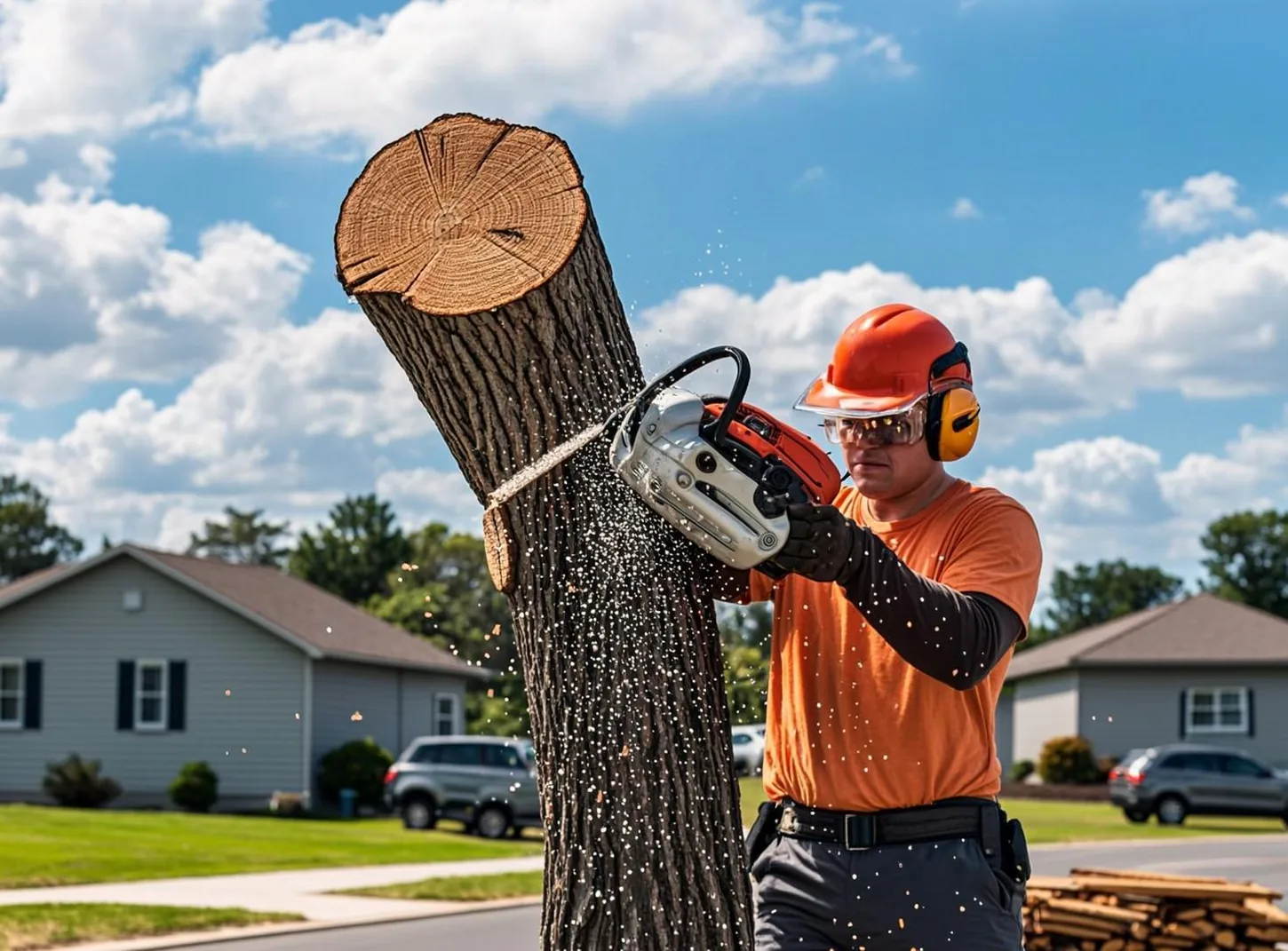
Tree Pruning
Structural and thinning cuts made with a pruning saw, branch by branch, at the right node. The crown regains its shape without pruning wounds: we work the whole branch, never the tip.
See the service →CimeSage — Sherbrooke, Eastern Townships
Structural pruning, crown thinning, controlled removal, stump grinding and cabling: CimeSage climbs, reads the scaffold and the root collar, then cuts at the right node so the tree heals on its own. In Sherbrooke and the Townships.
The method
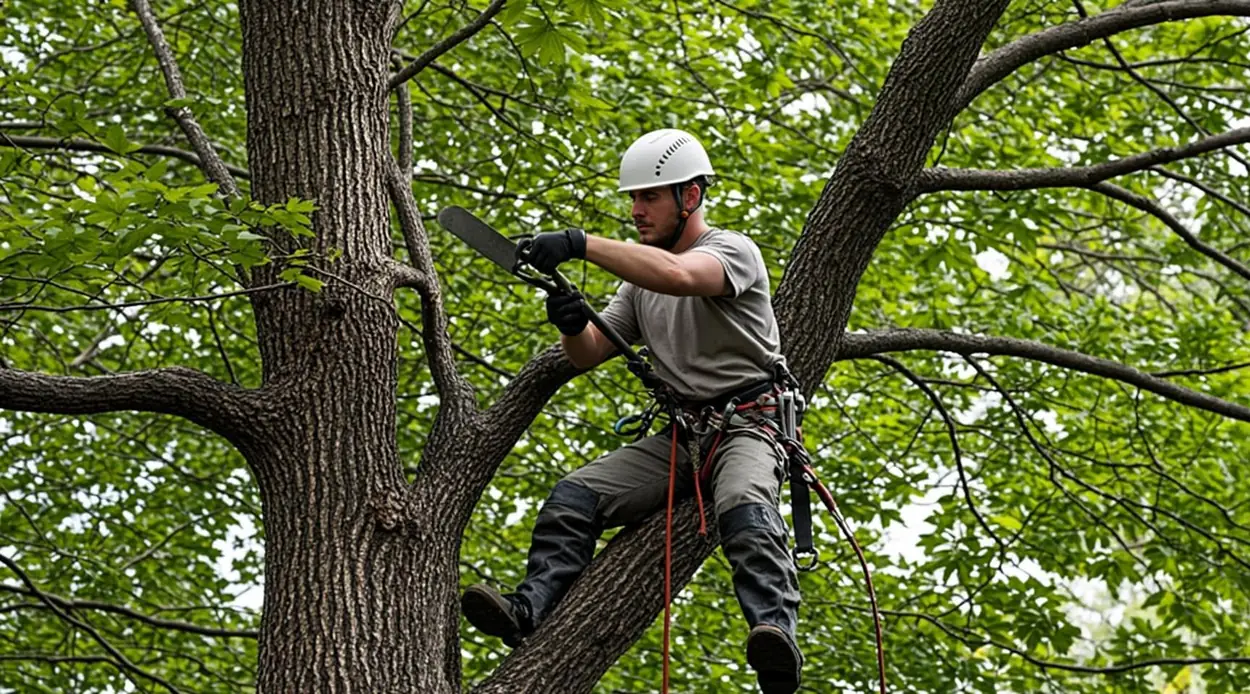
When a branch brushes a wire or a fork splits, the first question is not which branch to cut, but what the tree is saying. CimeSage walks the scaffold, checks the root collar and reads the signs before making a single cut.
01
The scaffold, the deadwood, the collar and the crown balance are read on the ground then on ropes. A cut is decided on those signs, never by a glance from the street.
02
The saw stops at the branch collar, where the tree closes its wound. Three-step undercut for heavy limbs, so the bark does not tear along the trunk.
03
Each section is guided on a rope, lowered gently and sent to the chipper. The lawn, the fence and the wires stay untouched.
04
A well-placed wound closes in a season or two. We never paint cuts: the tree heals better in the open air, when the cut is at the right node.
Our services
Structural and thinning cuts made with a pruning saw, branch by branch, at the right node. The crown regains its shape without pruning wounds: we work the whole branch, never the tip.
See the service →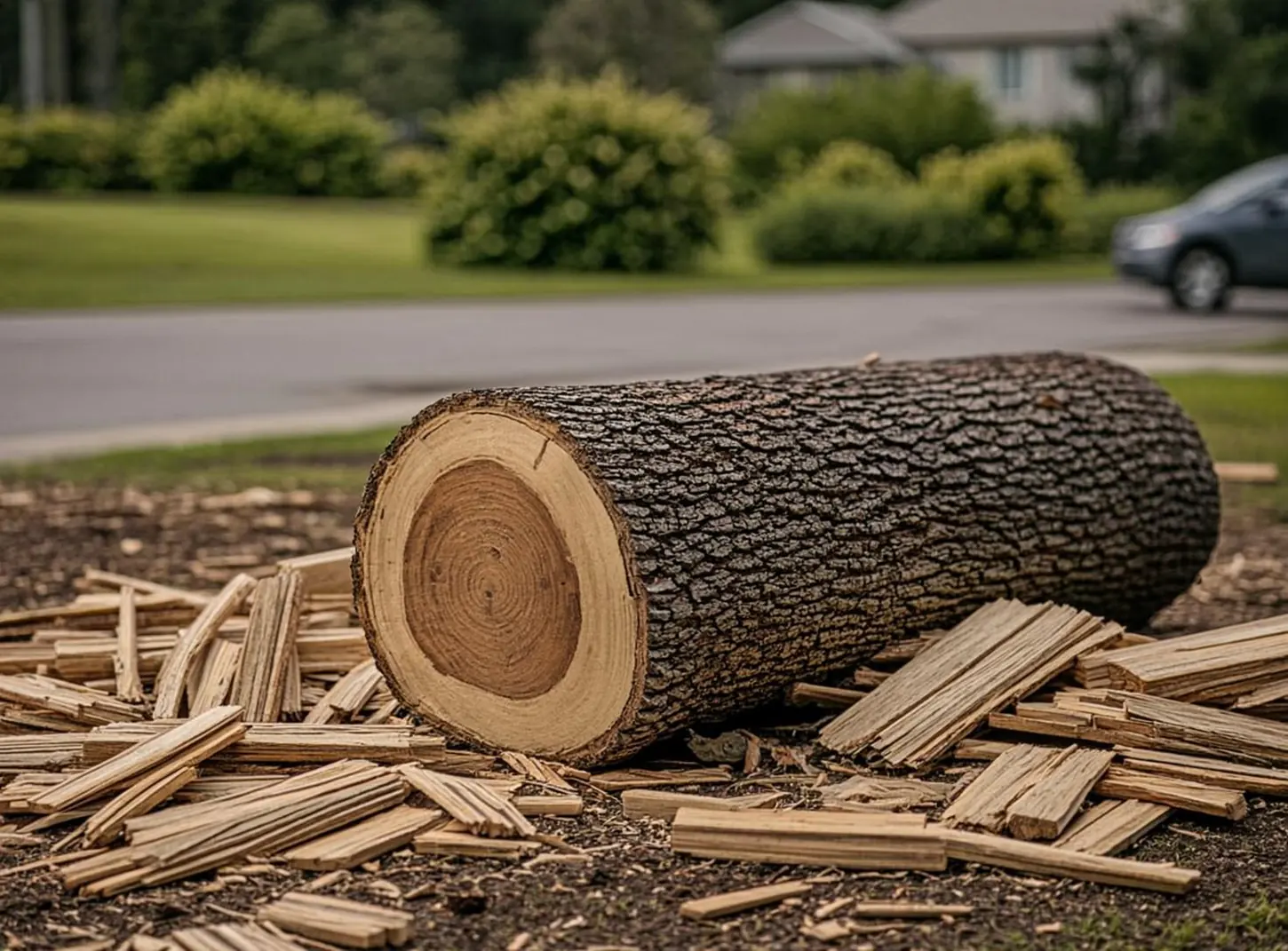
Controlled removal of a sick, dangerous or obstructive tree, sectioned from the top when space is tight. Retention line, directional notch and a safely cleared base.
See the service →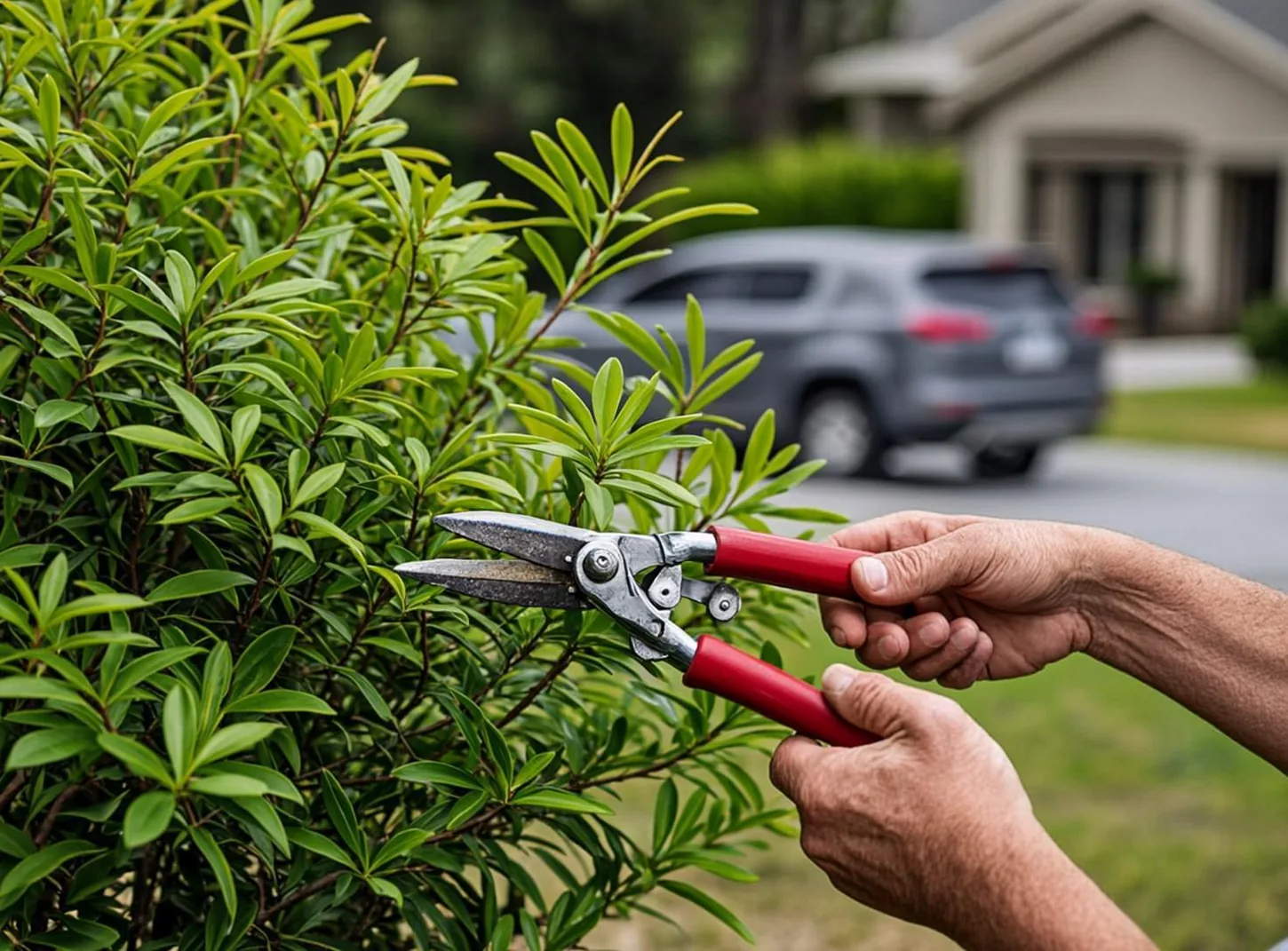
Removal of deadwood, rubbing branches and water sprouts that weigh the crown down. The tree breathes, lets light through and stops dropping dead limbs in the wind.
See the service →
Stump ground below soil level with a carbide disc grinder, main roots included. The spot is clean for sod, paving or replanting the very next day.
See the service →
Cables and threaded rods set between the scaffold limbs to tie a split fork together. The tree keeps its shape, and the crack stops working with every gust.
See the service →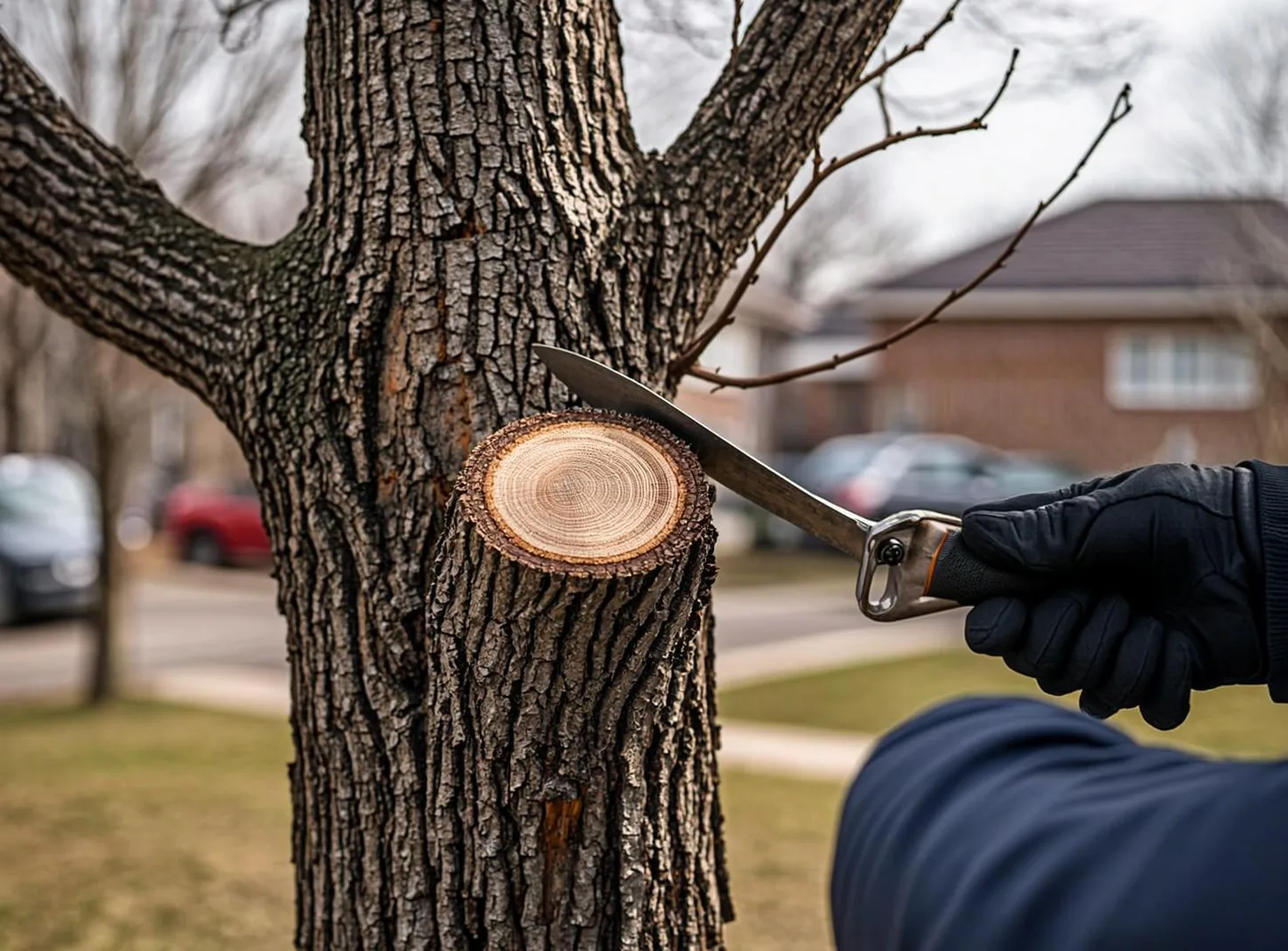
Clearance away from wires, roofs and entrances before the branch becomes a problem. Preventive cuts in late fall, when dormancy makes for a clean prune.
See the service →
The company
CimeSage works from the tree rather than from a fixed recipe. A silver maple with brittle wood is not cut like an oak with loaded limbs, and a tree with a sound collar is not treated like one that is lifting at the roots. The species, the age and the state of the scaffold decide the cuts, and the cut is always made at the branch collar, where the tree closes its own wound.
The proof of a finished job reads on the ground and on the trunk: no torn bark, no misplaced wound, no pile of branches on the lawn. The wood comes down in clean chips and the tree is left to heal in the open air, because a wound that is well placed closes faster than one that is painted over.
In the field
A tree rarely turns dangerous without warning. A fork that splits a little more each year, a branch that drops deadwood in every wind, a trunk that leans a degree further toward the roof — each one is the same tree talking. The signs start long before the limb comes down, and that is exactly when a structural prune or a cable still saves the tree instead of cutting it down.
The Townships winter loads trees with ice and wind, and the brittle species — silver maple, poplar, ash weakened by the emerald ash borer — are the first to let go. Reading the collar and the fork before the storm is what turns a dangerous tree into a safe one, without losing the shade it gives the yard.
A structural problem — a split fork, a hollow trunk, a branch resting on a wire — is not fixed by topping the tree and hoping. Topping opens wounds that never close and sends up weak shoots. The reading shows where the real weakness is, and the cut aims at it, so the tree is lighter and the wound heals.
Reviews
An 18-metre silver maple was leaning toward the house, two big scaffold limbs split. Structural pruning and two cables set in one day, the cut wood ha…
Luc P. — Sherbrooke
The ash by the lake was full of deadwood dropping onto the dock. Full crown thinning done on ropes, not one branch in the water, the yard left clean. …
Mireille G. — Magog
Removal of a birch rotten to the core, less than two metres from the shed. Sectioned from the top on a retention line, nothing touched the shed. The s…
Robert T. — Rock Forest
Five spruce stumps ground below soil level, roots included. I reseeded the lawn the next weekend and nothing is growing back. The grinder fit through …
Nadia B. — Coaticook
An elm brushing the Hydro lines in the backyard. Preventive clearance done in November during dormancy, clean cuts, the tree kept its shape. Hydro nev…
Sylvain D. — Lennoxville
Service area
The blog
2026-08-15
Pruning before winter: prepping the tree | CimeSage
The Townships winter loads trees with ice and wind: a tree lightened before the freezing rain holds, a tree full of dead
2026-08-08
Pruning near power lines | CimeSage
A branch brushing a wire is not cut like the others: the safe distance and the coordination with Hydro come before the s
2026-07-28
Cable or remove: how to decide | CimeSage
The decision comes down to three measures: the state of the collar, the depth of the split and what sits underneath. A s
Describe the tree — the species if you know it, the spot, what worries you — and how long it has been moving: we read the tree, then tell you what is worth doing before we come out.
Request an estimate